


Epilepsy is one of the most prevalent neurological disorders. Despite decades of research and development of epileptology as an independent area of practice and research, many aspects remain unclear and understudied, and a lot of issues remain unsolved [1]. With the introduction of artificial intelligence (AI) in daily life and its increasing use for various technologies used in medicine, AI gives hope as a probable game-changer. Areas where AI is entering include epilepsy diagnostics, including electroencephalography (EEG), wearable devices, magnetic resonance imaging (MRI), more sophisticated solutions and therapeutic modalities (predictive stimulation, stereo-EEG-guided ablation, etc.) [2-4]. In this review, we aimed to present the current trends in the field by summarizing the advances available.
OVERVIEW OF AI AND MACHINE LEARNING
Artificial intelligence is the science and engineering of building intelligent machines and computers that use a set of algorithms and rules mimicking human functions such as reasoning, learning, and problem solving [5].
Alan Turing played a pivotal role in laying the foundations of computer technology and AI, being one of the pioneers in these fields. In the 1940s, he created the “bombe”, which was able to break the Enigma code, the cipher previously considered unbreakable. He later published a paper, “Computing Machinery and Intelligence”, where he asked the question: “Can machines think?” [6]. The term “intelligent” for machines was defined by observing the machine’s response. If its response was indistinguishable from that of a human, the machine was considered intelligent. Nowadays, AI in healthcare has the capacity to assist with diagnoses, support decision making and automate processes.
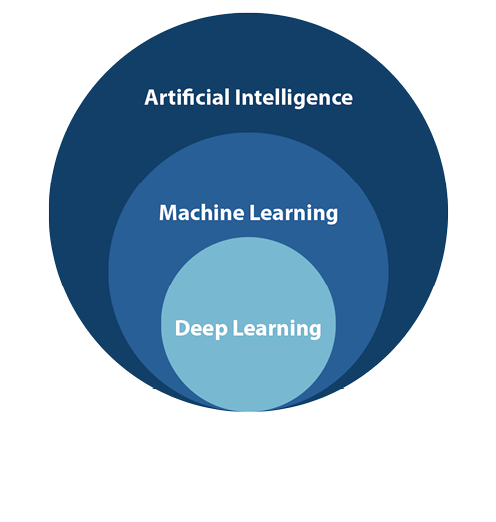
It is important to mention that AI has different subfields (Fig. 1). Machine learning (ML) is a subfield that uses algorithms trained on data to automatically make predictions and decisions without being explicitly programmed [7]. Deep learning (DL) is a subfield of ML which uses multi-layered neural networks like the human brain neuron and synapses, to automatically learn the patterns from data [8].
By using algorithms, ML studies and finds the patterns from large datasets, and based on that the model can make good predictions or extract useful information. Those models can be trained using the supervised learning where the model learns from input-output pairs (labeled data); unsupervised learning, which identifies patterns without predefined labels (unlabeled data); hybrid model that combines multiple algorithms, which could be various combinations of labeled and unlabeled data (semi-supervised learning); and reinforcement learning, which is agent-based learning that chooses an action based on previous encounter (exploitation) and fresh options (exploration), which is basically reward- or penalty-based, and can improve over time with additional data and feedback [9].
ELECTROENCEPHALOGRAPHY AND ARTIFICIAL INTELLIGENCE
Traditional methods of diagnosis
The primary goal of diagnostic evaluation of a patient with suspected epilepsy is to determine whether the episodes were provoked or not and to find the underlying causes. A detailed patient history is crucial alongside clinical findings, laboratory tests, and EEG in placing the diagnosis. Obtaining a thorough description of the patient’s state before, during, and after the seizure is also critical. Eyewitness accounts can also be very helpful [10]. EEG is the most utilized tool for evaluating patients with a history of seizures. In the right hands, it provides the necessary information for the diagnosis and even classification of epilepsies. Even though epilepsy is one of the most common and serious neurological findings, EEG is not widely available even in countries with relatively advanced healthcare systems. Additionally, most of the EEGs are read by physicians who have not undergone additional training and fellowship in EEG interpretation. Wrongly interpreted EEGs (including both overdiagnosis and underdiagnosis) are the number one cause of misdiagnosis or late diagnosis of epilepsy [11]. In addition to EEG, neuroimaging is helpful in diagnosis and classification. Both tools have seen improvement and AI integration in recent years.
Use of AI in EEG
The fields of telemedicine and AI are poised to revolutionize epilepsy diagnosis and management. Telemedicine has demonstrated its effectiveness during the COVID-19 pandemic, bridging the gap between patients in resource-limited regions and specialized neurological care. In one study, this approach successfully reduced the epilepsy treatment gap from 43% to 9% [12].
Artificial intelligence is also showing significant promise in transforming epilepsy care, particularly by enhancing the accuracy of EEG interpretation and seizure prediction. For example, a convolutional neural network (CNN) model classified abnormal EEG recordings with 88.3% accuracy and 90% specificity, while other models designed for seizure prediction achieved 96.8% sensitivity and 95.5% specificity [13,14]. Beyond EEG data, AI algorithms are increasingly being applied to neuroimaging, electronic health records, medical device outputs, and even seizure videos [14,15].
Machine learning models have also shown potential in identifying interictal biomarkers and localizing seizure onset zones, thereby aiding treatment decisions and outcome prediction. One model localized the seizure onset zone with 73% accuracy and predicted surgical outcomes with 79% accuracy, outperforming clinicians who achieved only 43% accuracy [15,16].
Artificial intelligence is also gaining traction in acute and emergency settings, where EEG is invaluable but often constrained by the limited availability of expert neurophysiologists. In one prospective study, a limited-functionality EEG system supported by AI was tested in emergency departments to detect nonconvulsive seizures in patients with unexplained mental status changes. The system achieved a specificity of 97.0% and a sensitivity of 66.7%, accurately detecting most seizure cases but occasionally overestimating seizure burden by flagging some normal patterns or some abnormal EEG patterns as seizures [17].
Despite the rapid development of AI tools, only a few have been successfully translated into routine clinical practice. Early efforts were dominated by ML, but DL approaches are now increasingly prevalent [14,15]. Barriers to broader implementation include data bias, limited dataset availability, heterogeneity, and challenges with integration into clinical workflows and interpretability of AI decisions [15,18].
Clinicians are likely to develop more trust towards ML algorithms thanks to the interpretability and transparency ML provides, in contrast with DL models that lack interpretability [19,20]. Meanwhile, the manual segmentation and feature extraction required by ML add another bias and potential heterogeneity [21]. DL excels over ML in real-time seizure monitoring and provides better automated image and signal interpretability [22].
Realizing the full potential of AI in epilepsy care will require collaboration between researchers and clinicians, as well as robust clinical trials and ethical frameworks to ensure both efficacy and patient safety [15].
NEUROIMAGING AND ARTIFICIAL INTELLIGENCE
Neuroimaging plays an important role in the diagnostics, differential diagnosis, and management of patients with epilepsy. From the patient’s first seizure, at least one neuroimaging study is recommended at an early stage, to detect potential causes of the seizure and lesions. The International League Against Epilepsy (ILAE) prefers the use of standardized MRI over computed tomography (CT) within the first few days after a seizure [23].
The integration of AI into neuroimaging is driven by the need to analyze increasingly complex and high-dimensional MRI data [24]. In epilepsy diagnostics, AI helps with accurately localizing subtle epileptogenic lesions and assist in presurgical planning, demonstrating sensitivity of up to 90% in some studies [25]. Another study used a DL model to identify the correct hemisphere of seizure onset in temporal lobe epilepsy, a crucial step in surgical evaluation [26]. More specific and trained AI models are being used to classify paediatric refractory epilepsy from healthy controls using resting state functional MRI (rfMRI) data [27]. Despite this potential, there are some significant disadvantages and challenges. One of the primary challenges is the “black box” issue in some DL models, where the system gets to a conclusion without proper explanation of how it got there [28]. Furthermore, many of the AI diagnostic tools lack significant and standardized datasets and are usually trained on select cases. This data scarcity limits both the abilities of AI and its implication in clinical use [26-28].
WEARABLE DEVICES
Continuous epilepsy monitoring is crucial, as seizures are frequently underreported and self-reported seizure diaries have proven to be unreliable [29].
The unpredictability of seizures reduces quality of life and leads to social isolation. Wearable devices should be designed to integrate seamlessly and not cause more isolation from the society, hereby affecting the patient’s quality of life in the usage process. That is why manufacturers try to make wearable devices with only one electrode, since having more electrodes could be conspicuous and attract unnecessary attention to the patient.
The ILAE-IFCN (International Federation of Clinical Neurophysiology) guidelines conclude that clinically validated wearable devices can accurately detect generalized tonic-clonic seizures (GTCS) and focal-to-bilateral tonic-clonic seizures (FBTCS). However, such recommendations cannot be made for patients with other types of epilepsy due to insufficient data [30].
Sudden unexpected death in epilepsy (SUDEP) is often associated with GTCS, so wearable devices may provide valuable data on the causes of SUDEP [31].
Overall, wearable devices offer potential new opportunities for more personalized treatment, but further research is essential to fully realize their potential.
EPILEPSY PREDICTION
What is Epilepsy prediction?
While epileptic seizures often seem unpredictable, research shows that they do not occur randomly. Numerous studies have demonstrated that seizure onset is measurable and has identifiable neural patterns, opening an expanding research field of seizure prediction and forecasting [32-34].
Epilepsy prediction aims to develop algorithms capable of extracting these neural patterns from EEG data [33]. Studies show that the pre-ictal period can range from a few minutes to an hour before a seizure, containing dynamic EEG changes that can serve as reliable predictors [35-37].
The main idea of seizure prediction is to extract and classify patterns of electrical activity to forecast seizure onset and provide timely notifications. Such alerts, delivered during the Seizure Occurrence Period (SOP) and within a predefined Seizure Prediction Horizon (SPH), can help ensure patient safety and enable early medical intervention [37].
Deep learning models changed the prediction process by learning directly from raw EEG input data. In the case of traditional ML models, the input data need a preprocessing stage where raw EEG signals are transformed into engineered features. These models then perform classification based on manually extracted features in DL approaches, CNN automatically extracts features and classifies between seizure and non-seizure states.
Traditional ML models for seizure prediction rely heavily on a preprocessing stage, where raw EEG signals are transformed into handcrafted features such as statistical or spectral descriptors. These engineered features are then used for classification by models like support vector machines (SVMs) or random forests, both of which are ML algorithms [38,39]. In contrast, DL models, particularly CNNs, bypass this manual feature engineering by directly learning hierarchical representations from raw EEG inputs. This enables more flexible and potentially more accurate seizure classification in real time [40].
Prediction has a significant challenge in epilepsy care due to its accuracy. The main metrics of understanding whether the prediction model works (how good the model detects and predicts), is its sensitivity and False Prediction Rate (FPR). Another type of challenge is the EEG artifacts [41]. One proposed way to reduce classification errors is applying a post-processing step [42].
One study achieved a prediction success rate of 77.30%, a sensitivity of 95.94%, an FPR of 0.041 h−1, and an average prediction time of 33.23 minutes. The SPH value was determined to be 5 minutes, as for all patients correct alarms were generated at least five minutes prior to the seizure [43].
The integration of prediction models into the wearable devices has a potential to better the quality of life of patients by mitigating the fear of uncertainty surrounding the seizures, and reducing the rates of preventable injuries and deaths.
FUTURE DIRECTIONS
Why does humanity need thinking machines? To understand where they will lead, we must first remember why they were created. They are merely tools designed and trained by humans, therefore they will mirror what the latter are. The integration of AI in epilepsy management can surely have negative effects if implemented incorrectly. However, with the right approach, it can facilitate more efficient training of the new generation of epileptologists, become a tool that can help reduce manual work time and human error, and decrease the disease burden for patients and families, which AI-integrated gadgets could help achieve. However, the “black box” issue still remains, and there is a need to develop more interpretable AI models to increase transparency and trust, resulting in easier clinical adoption [44]. It is only a matter of time before collaboration between medicine and AI helps break the enigma of epilepsy.
Fig. 1. The hierarchy relationship between artificial intelligence, machine learning and deep learning.
References
- WHA68.20 Resolution, 2015.
- Yu S, El Atrache R, Tang J, et al. Artificial intelligence-enhanced epileptic seizure detection by wearables. Epilepsia. 2023;64(12):3213-3226.
- Nair A, Ong W, Lee A, et al. Enhancing radiologist productivity with artificial intelligence in magnetic resonance imaging (MRI): a narrative review. Diagnostics (Basel). 2025;15(9):1146.
- Varatharajah Y, Berry B, Cimbalnik J, et al. Integrating artificial intelligence with real-time intracranial EEG monitoring to automate interictal identification of seizure onset zones in focal epilepsy. J Neural Eng. 2018;15(4):046035.
- McCarthy J. What is artificial intelligence. 2007.
- Haenlein M, Kaplan A. A brief history of artificial intelligence: on the past, present, and future of artificial intelligence. California Management Review. 2019;61(4):5-14.
- Kufel J, Bargieł-Łączek K, Kocot S, et al. What is Machine Learning, artificial neural networks and Deep Learning?—Examples of Practical applications in medicine. Diagnostics. 2023;13(15):2582.
- LeCun Y, Bengio Y, Hinton G. Deep learning. Nature. 2015;521(7553):436-444.
- Taye MM. Understanding of machine learning with deep learning: architectures, workflow, applications and future directions. computers. 2023; 12(5):91.
- Piccenna L, O’Dwyer R, Leppik I, et al. Management of epilepsy in older adults: A critical review by the ILAE Task Force on Epilepsy in the elderly. Epilepsia. 2023;64(3):567-585.
- Benbadis SR, Lin K. Errors in EEG interpretation and misdiagnosis of epilepsy. Which EEG patterns are overread?. Eur Neurol. 2008;59(5):267-271.
- Rajbhandari H, Joshi S, Malakar S, et al. Epilepsy field workers, a smartphone application and telephone telemedicine: Safe and effective epilepsy care in rural Nepal. Seizure. 2019;64:54-58.
- Tveit J, Aurlien H, Plis S, et al. Automated Interpretation of Clinical Electroencephalograms Using Artificial Intelligence. JAMA Neurol. 2023;80(8):805-812.
- Han K, Liu C, Friedman D. Artificial intelligence/machine learning for epilepsy and seizure diagnosis. Epilepsy Behav. 2024;155:109736.
- Lucas A, Revell A, Davis KA. Artificial intelligence in epilepsy - applications and pathways to the clinic. Nat Rev Neurol. 2024;20(6):319-336.
- Gunnarsdottir KM, Li A, Smith RJ, et al. Source-sink connectivity: a novel interictal EEG marker for seizure localization. Brain. 2022;145(11):3901-3915.
- Richard C, Schriger D, Weingrow D. Rapid electroencephalography and artificial intelligence in the detection and management of nonconvulsive seizures. Ann Emerg Med. 2024;84(4):422-427.
- Alkhaldi M, Abu Joudeh L, Ahmed YB, Husari KS. Artificial intelligence and telemedicine in epilepsy and EEG: A narrative review. Seizure. 2024;121:204-210.
- Wu L, Liu Z, Huang H, et al. Development and validation of an interpretable machine learning model for predicting the risk of hepatocellular carcinoma in patients with chronic hepatitis B: a case-control study. BMC Gastroenterol. 2025;25(1):157.
- Razi KF, Schmid A. Epileptic seizure detection with patient-specific feature and channel selection for low-power applications. IEEE Trans Biomed Circuits Syst. 2022;16(4):626-635.
- Scheffer D, Klöpper J, Scheffer N, et al. Using dynamic item response theory and machine learning based on natural language processing to improve the reliability of the Operant Motive Test. Motivation Science. 2024;11(1):24-38.
- Jibon FA, Jamil Chowdhury AR, Miraz MH, et al. Sequential graph convolutional network and DeepRNN based hybrid framework for epileptic seizure detection from EEG signal. Digit Health. 2024;10:20552076241249874.
- Berger M, Licandro R, Nenning KH, Langs G, Bonelli SB. Artificial intelligence applied to epilepsy imaging: Current status and future perspectives. Rev Neurol (Paris). 2025;181(5):420-424.
- Bernhardt BC, Hong SJ, Bernasconi A, Bernasconi N. Magnetic resonance imaging pattern learning in temporal lobe epilepsy: classification and prognostics. Ann Neurol. 2015;77(3):436-446.
- Zhang L, Abdeen N, Lang J. A novel center-based deep contrastive metric learning method for the detection of polymicrogyria in pediatric brain MRI. Comput Med Imaging Graph. 2024;114:102373.
- Luckett PH, Maccotta L, Lee JJ, et al. Deep learning resting state functional magnetic resonance imaging lateralization of temporal lobe epilepsy. Epilepsia. 2022;63(6):1542-1552.
- Nguyen RD, Kennady EH, Smyth MD, et al. Convolutional neural networks for pediatric refractory epilepsy classification using resting-state functional magnetic resonance imaging. World Neurosurg. 2021;149:e1112-e1122.
- Pastore LV, De Vita E, Sudhakar SV, et al. Advances in magnetic resonance imaging for the assessment of paediatric focal epilepsy: a narrative review. Transl Pediatr. 2024;13(9):1617-1633.
- Fisher RS, Blum DE, DiVentura B, et al. Seizure diaries for clinical research and practice: Limitations and future prospects. Epilepsy & Behavior. 2012;24(3):304-310.
- Beniczky S, Wiebe S, Jeppesen J, et al. Automated seizure detection using wearable devices: A clinical practice guideline of the International League Against Epilepsy and the International Federation of Clinical Neurophysiology. Clin Neurophysiol. 2021;132(5):1173-1184.
- Ryvlin P, Ciumas C, Wisniewski I, Beniczky S. Wearable devices for sudden unexpected death in epilepsy prevention. Epilepsia. 2018;59(S1):61-66.
- Kerr WT, McFarlane KN, Figueiredo Pucci G. The present and future of seizure detection, prediction, and forecasting with machine learning, including the future impact on clinical trials. Front Neurol. 2024;15:1425490.
- Andrzejak RG, Zaveri HP, Schulze-Bonhage A, et al. Seizure forecasting: Where do we stand? Epilepsia. 2023;64(S3):S62-S71.
- Batista J, Pinto MF, Tavares M, et al. EEG epilepsy seizure prediction: the post-processing stage as a chronology. Sci Rep. 2024;14(1):407.
- Bandarabadi M, Rasekhi J, Teixeira CA, Karami MR, Dourado A. On the proper selection of preictal period for seizure prediction. Epilepsy Behav. 2015;46:158-166.
- Litt B, Esteller R, Echauz J, et al. Epileptic seizures may begin hours in advance of clinical onset: a report of five patients. Neuron. 2001;30(1):51-64.
- Aziz S, A M Ali A, Aslam H, et al. Wearable artificial intelligence for epilepsy: scoping review. J Med Internet Res. 2025;27:e73593.
- Himalyan S, Gupta V. Support vector machine-based epileptic seizure detection using EEG signals. Engineering Proceedings. 2022;18(1):73.
- Kalousios S, Larochelle J, Zabler N, et al. Memory optimized random forest classifier for EEG seizure detection in implantable monitoring and closed-loop neurostimulation devices. J Neural Eng. 2025;22(3):036023.
- Saadoon YA, Khalil M, Battikh D. Machine and deep learning-based seizure prediction: a scoping review on the use of temporal and spectral features. Applied Sciences. 2025;15(11):6279.
- Ingolfsson TM, Benatti S, Wang X, et al. Minimizing artifact-induced false-alarms for seizure detection in wearable EEG devices with gradient-boosted tree classifiers. Sci Rep. 2024;14(1):2980.
- Agboola HA, Solebo C, Aribike DS, Lesi AE, Susu AA. Seizure prediction with adaptive feature representation learning. J Neurol Neurosci. 2019;10(2).
- Coşgun E, Çelebi A. FPGA based real-time epileptic seizure prediction system. Biocybernetics and Biomedical Engineering. 2021;41(1):278-292.
- Zhu L, Ooi ZJ, Zhang T, Brooks CS, Pan L. Identification of flow regimes in boiling flow with clustering algorithms: An interpretable machine-learning perspective. Applied Thermal Engineering. 2023;228:120493.