


Armenia historically and in modern times had a lot of prominent persons in the field of academic basic and clinical research and medicine. Professor Gabriel Khachatryan is among those who was shaping the field of biochemistry both in Soviet-time Armenia and throughout the Soviet Union for decades. He had many talents, including sharp vision of research and scientific rigor, and a great aptitude for teaching being admired by his students and fellow scholars (Fig. 1).
Life
Gabriel Khachatryan was born in 1924 in Brun village (nowadays Akner community) in south Armenian region of Syunik to a farmer family and exhibited a huge learning capacity from childhood. Gabriel was so eager to study at school that being just an adolescent was appointed a mathematics teacher at a regional school. He would later become the school’s principal, perhaps the youngest school principal Armenia has ever witnessed. As the family was fond of him and did not want him to lose motivation, they were supporting him in pursuing his mission.
However, with the outbreak of World War II, following in the footsteps of his brother Gurgen, he volunteered for the front, despite not being old enough for regular mobilization. Gabriel participated in World War II and could have continued his career by enrolling in a higher military academy, but his family asked him to return from military. He promised to his father Samson to become a “Professor”. He fulfilled this promise, and his father’s gravestone was engraved on with the inscription “From Professor Gabriel Khachatryan”, expressing Professor’s love to his family and emphasizing the dedication to his important mission. In recognition of his fruitful career as an educator and scientist, in the late 1990s, regional authorities named the school in his native village of Akner after Professor Khachatryan following his death in 1997.
Research
Professor Gabriel Khachatryan was the student of a prominent Soviet biochemist, Academician Hrachya Buniatyan. Their research focused primarily on brain biochemistry. His early studies in animal models were on brain glucose metabolism [1]. Later works were mostly focused on brain nucleic acids metabolism, the role of various peptides in their regulation [2]. His research was also dedicated to the biochemistry of terminal states and some experimental approaches in drug development [3,4]. Some examples of his findings may be the elucidation of the importance of cAMP and S-adenosyl-L-methionine in the mechanisms regulating the level of nucleic acids and activity of enzymes involved in their metabolism [5]. Also, he was among those to suggest a hypothesis about the “participation of the neuropeptides in the regulation of various types of the brain RNA biosynthesis, as a primary messenger (starting signals) during the stimulation of the initiation of cycloadenylate- and cycloguanylate-sensitive transcription, via phosphorylation of diverse RNA-polymerases” [6]. He successfully defended his doctoral thesis, and this research was comprehensively represented in his two monographs: “Brain biochemistry in normal physiological conditions. Brain’s hexose-monophosphate shunt” (1967) and “The biochemistry of nucleic acids and higher brain functions” (1981). The latter represented the culmination of the work done at the Brain Biosynthetic Reactions Laboratory, which he established in 1967 at the Yerevan State Medical Institute [6]. This was a nest-place for many PhD and doctoral research works, which received international recognition and were presented at various international biochemical congresses.
Teaching
Prof. Gabriel Khachatryan was a great teacher and educator as well. His lectures were revered by many students for their clarity, academic presentation style and were attracting students and educators from other universities. He also evolved as an administrator, serving as Vice-Rector for Science at the Yerevan State Medical Institute for several years before his administrative career culminated into becoming the Rector of the same institution in 1968. During the last years of his life his whole focus went on creating an Armenian-language textbook for his Alma mater’s students. He continued working despite poor health, completing the handwritten manuscript approximately 1.5 months before his death. It was later finalized and prepared by Professor Mikhail Aghajanov and published by Yerevan State Medical University, helping many generations of medical students learn and witness Prof. Khachatryan’s unique presentation way of his beloved yet complex subject.
Heritage
Prof. Khachatryan had many friends and collaborators in various countries and laboratories across the world, and his connections spread abroad, with colleagues in the United States, the European Union and Japan. He had several invitations to work in other laboratories in Moscow, Leningrad (Saint-Petersburg) and overseas. However, he was in love with his country and birthplace very much and always sought to remain in Armenia and advance biochemistry education and neurochemistry research in his motherland. His dedication was rewarded with numerous scientific publications and educating of many outstanding Armenian researchers, as well as scientists and clinicians living in the former Soviet republics and abroad, who proudly acknowledge Prof. Gabriel Khachatryan as their great teacher.
References
- Khachatrian GS. [Content of galactolipids in the brain of white rats in various functional conditions of the brain]. Vopr Med Khim. 1962;8:260-263.
- Khachatrian GS, Antonian AA, Alaverdian AA, Sarkisian FA, Minasiants RT. [Concentration of different forms of RNA in the brain under natural physiologic conditions]. Vopr Biokhim Mozga. 1974;9:123-150.
- Khachatrian GS, Kazarian KA. [Monoamine content in different parts of rat brain in terminal states and during the rehabilitation period after resuscitation]. Zh Eksp Klin Med. 1978;18(5):20-29.
- Khachatrian GS. [Enzymes of the biopolymer metabolism in brain tissue in pathology]. Vestn Akad Med Nauk SSSR. 1984;(1):62-67.
- Khachatrian GS, Antonian AA, Alaverdian AA, Sarkisian FA, Akopian AA. [Concentration of different forms of RNA in the brain and ribonuclease activity of the nuclear, ribosomal and supernatant fractions of brain tissue following the action of cyclic adenosine-3’,5’-monophosphate and S-adenosyl-L-methionine]. Vopr Biokhim Mozga. 1975;10:168-181.
- Khachatrian GS. [Possible role of neuropeptides in regulating nucleic acid biosynthesis in the brain]. Vopr Biokhim Mozga. 1978;13:206-220.
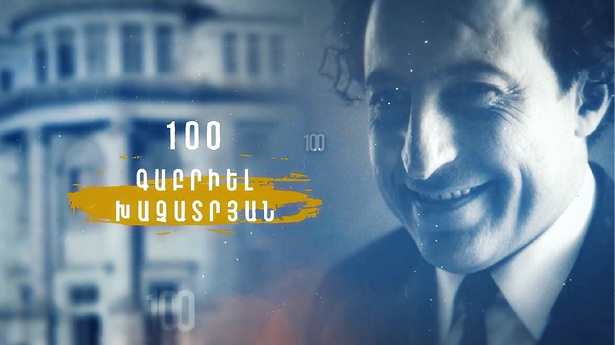
Fig. 1. Prof. Gabriel Khachatryan in the 2025 TV documentary dedicated to his 100th anniversary. Directed by Artur Atayan (courtesy of Boon TV).